
Why the switch matters
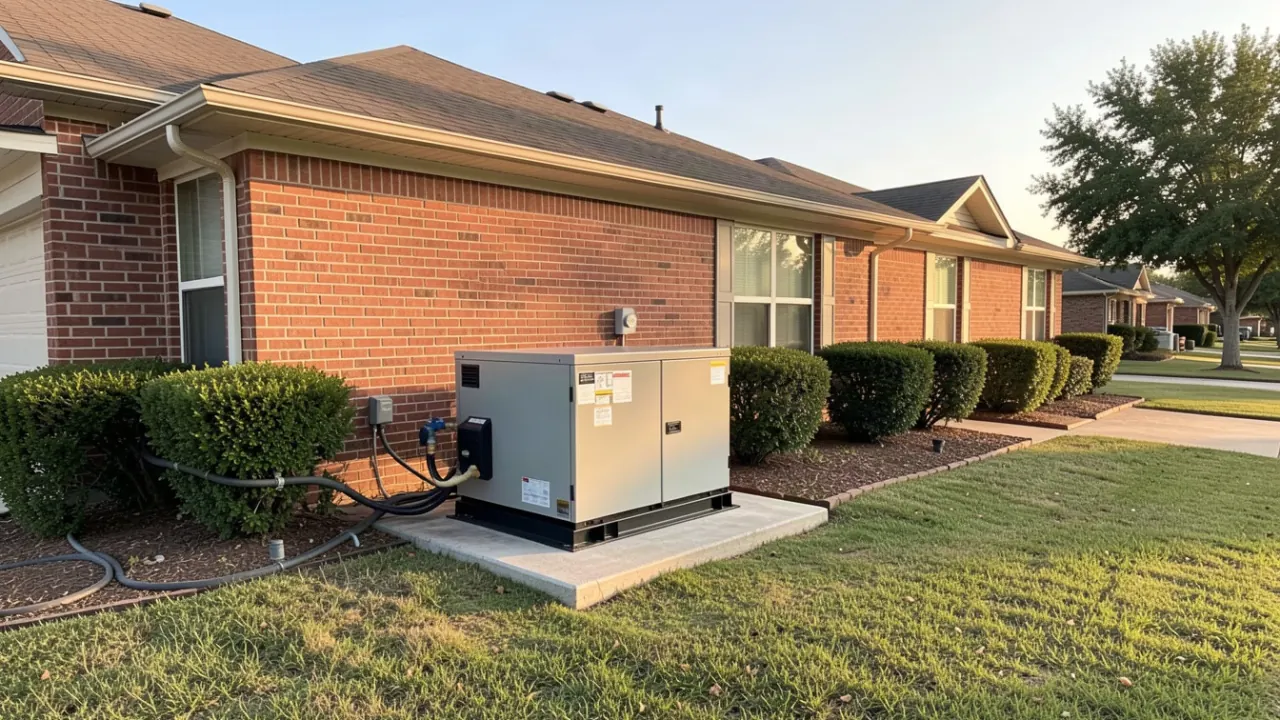
Generac describes the standby setup simply: the switch goes in next to the main breaker panel, senses the outage and starts the generator by itself. Safety is the bigger reason. OSHA warns that a generator tied directly into building wiring can energize lines for long distances and put utility workers at risk of electrocution. A properly installed switch keeps generator power on your side only.
Types of transfer equipment
- Automatic transfer switch (ATS). Senses the outage, starts the generator and moves the load with no one home. Standard with permanent standby units.
- Manual transfer switch. You start the generator and flip the switch. Common with portable units.
- Interlock kit. A plate on the main panel that prevents the main breaker and the generator breaker from being on together. A lower-cost option for portables, where local code accepts it.
- Whole-house or load-managed. A service-rated switch can carry the whole panel, while a load-managed setup sheds big loads so a smaller generator keeps up.
Automatic or manual: how the day plays out
Picture an outage at 2 a.m. in January. With an automatic switch, the house goes dark for a few seconds, the generator starts on its own, and the heat comes back on before anyone gets out of bed. When Oncor restores service, the switch waits for steady utility power, moves the load back and lets the generator cool down and stop.
With a manual switch and a portable unit, someone has to wake up, roll the generator out to a safe spot away from doors and windows, start it, plug in the inlet cord and throw the switch. OSHA advises 3 to 4 feet of clear space on all sides and above a portable generator. It works, and it costs less, but it depends on a person being home and able to do it in bad weather.
For a business, an automatic switch is usually the only practical choice. Nobody wants a manager driving in during an ice storm to start equipment.
Signs you need one
- You are installing a standby generator. It cannot run without one.
- You own a portable unit and run extension cords through a window every outage.
- Your older switch fails to transfer or return, or it buzzes or smells hot.
- You are upgrading the main panel or service and want the switch done at the same time.
What is involved
- Panel check. The pro confirms panel condition, amperage and space. Some homes need a new panel or a subpanel first.
- Switch selection. Automatic or manual, 100, 200 or 400 amp, whole-house or load-managed.
- Permit. Most areas require a permit for this electrical change.
- Installation. The switch mounts beside the main panel and is wired to the generator and the circuits it will carry.
- Test. The pro cuts utility power, confirms the transfer, then restores power and confirms the return.
Transfer switch costs
| Item | Reported range | Source |
|---|---|---|
| Automatic switch, installed | $600 to $2,500 | HomeGuide |
| Manual switch, installed | $400 to $1,300 | HomeGuide |
| Interlock kit, installed | $400 to $850 | HomeGuide |
| 200 amp switch, unit only | $680 to $1,500 | HomeGuide |
| 400 amp switch, unit only | $1,800 to $3,200 | HomeGuide |
| Electrical permit | $50 to $350 | HomeGuide |
| New panel if needed | $850 to $2,500 | HomeGuide |
| Subpanel if needed | $500 to $1,700 | HomeGuide |
Angi estimates about $1,200 of a standby project goes to the switch and its wiring. Your final number comes from the on-site look at your panel. Compare with the generator installation cost page.
What to ask the electrician
- Automatic or manual for my setup, and why?
- What amperage, and does it cover the whole panel or selected circuits?
- Does my panel need an upgrade first?
- Will the switch work with the generator brand I own or plan to buy?
- Is your license active with TDLR?
Planning the generator too? See generator sizing and whole home standby generators.
Areas we cover for transfer switch installation
Generator questions
Can I connect a portable generator to my panel without a transfer switch?
Not safely. OSHA says never to attach a generator directly to a building's wiring unless a qualified electrician has installed it with a transfer switch. Backfeed can reach the utility lines.
How long does a transfer switch install take?
HomeGuide puts a straightforward install at about two to four hours. Panel upgrades, long wire runs and inspections add time.
Is an interlock kit allowed in Dallas homes?
Ask your electrician. Acceptance depends on the panel and on what the local inspector approves for that equipment. The pro should confirm before quoting it.