
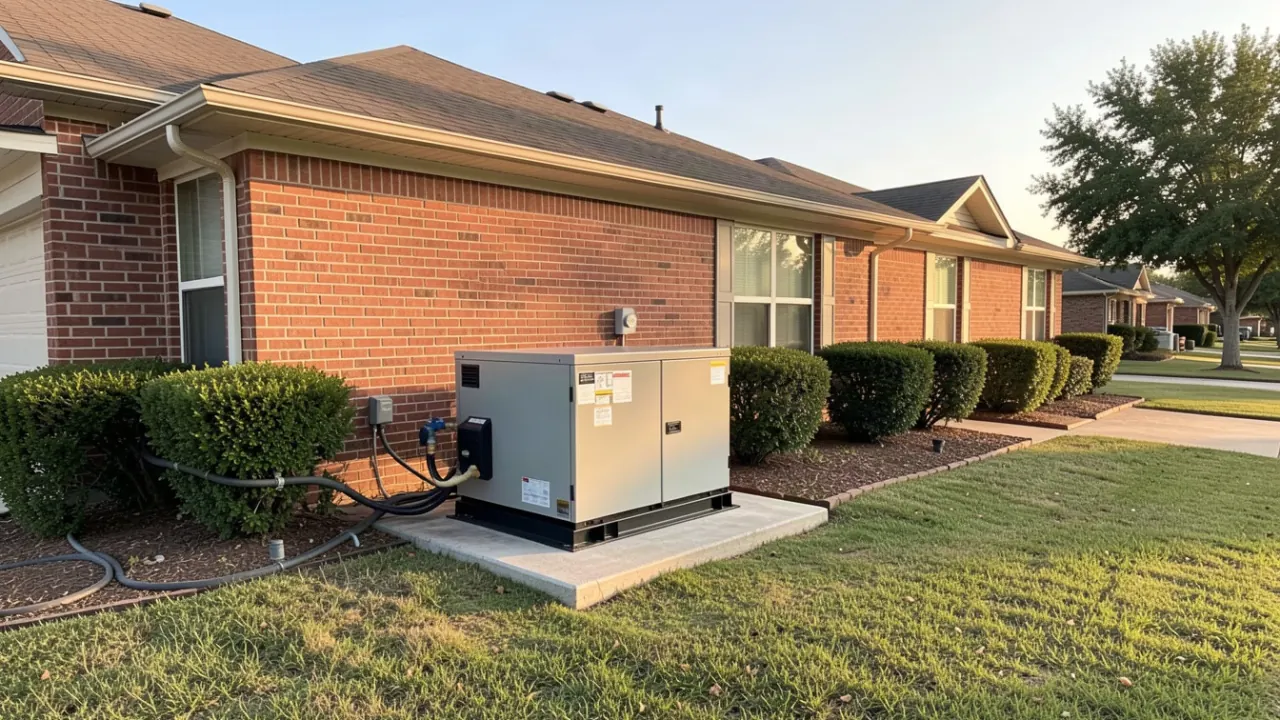
Who requests commercial backup power
- Medical and dental offices with refrigerated supplies, imaging or patient records on local servers.
- Restaurants that cannot afford to dump a walk-in cooler after a long outage.
- Offices with a server closet, phone system or security system that must stay up.
- Data rooms and IT spaces. Atmos Energy notes that data centers often rely on natural gas for standby generation.
- Retail and light industrial sites where a few hours of downtime costs more than the generator.
Some equipment is covered by code, not choice. Fire alarms, elevators and fire pumps fall under the emergency and legally required standby rules of NEC Articles 700 and 701. NFPA 110, the standard for emergency and standby power systems, also comes into play.
What Dallas asks for before you build
The City of Dallas backup generator checklist for non-residential sites lists the papers a contractor submits:
- A building inspection application.
- For an outdoor unit, a scaled site plan with property lines, buildings and easements, plus a parking analysis if the unit takes up parking.
- For an indoor unit, a floor plan with the location, the rooms around it and any fire separations, and a building code plan review.
- One-line electrical drawings, a load analysis and specs for the generator, the transfer equipment and any tank.
- The fuel type. Diesel stored above 60 gallons and gasoline above 10 gallons need a flammable liquid permit, propane needs one at any amount, and natural gas needs a separate plumbing permit.
Incomplete applications are not accepted. If something is missing, the applicant gets five working days to respond, and a resubmittal goes back in line as a new application. A contractor who has been through this review before saves real time.
If you lease your space, bring the landlord in early. The site plan, the fuel choice and any roof or parking changes usually need the owner's sign-off before the city sees them.
What is involved
- Needs review. Decide whether the generator carries the whole building or only critical circuits.
- Fuel choice. Diesel is the most common commercial fuel because of lower upfront and upkeep cost. Natural gas uses the utility line but depends on that supply staying up. Large gas loads should be raised with Atmos Energy early, since its system may not have spare capacity for very large demands.
- Engineering and permits. Drawings, load analysis and equipment specs go to plan review.
- Installation. Pad or interior room, fuel system, automatic transfer switch, conduit and controls.
- Commissioning and testing. A load test proves the set makes its rated output. Federal rules let emergency engines run up to 100 hours a year for maintenance and testing.
Commercial cost ranges
| Item | Reported range | Source |
|---|---|---|
| 30 kW generator (equipment) | about $30,000 | Advanced Energy |
| Typical commercial backup system | $25,000 to $150,000 | LatestCost |
| 150 kW diesel standby, installed | $85,000 to $140,000 | LatestCost |
| Transfer switch | $3,000 to $35,000 | LatestCost |
| Fuel system and storage | $2,000 to $40,000 | LatestCost |
| Permits and inspections | $500 to $12,000 | LatestCost |
A commercial bid depends on voltage, size, fuel, tank size, noise limits and how far the unit sits from the switchgear. Treat these as planning numbers only. See generator installation cost for residential figures and quote tips.
What to ask the contractor
- Which circuits do you propose to back up, and why?
- Will the system be classed as emergency, legally required or optional standby?
- Who prepares the one-line drawings and load analysis for plan review?
- What fuel do you suggest, and how many hours will the tank run at full load?
- What does a yearly maintenance and load-bank test plan include?
- Can I see the electrical contractor license on the TDLR electricians lookup?
Related reading: generator sizing and transfer switch installation.
Areas we cover for commercial generator installation
Generator questions
Should a restaurant back up the whole building or just the coolers?
It depends on whether you want to keep serving or just protect inventory. Covering refrigeration, lights and the point-of-sale system costs far less than carrying hood fans and cooking equipment. A load analysis shows the gap.
Is diesel or natural gas better for a Dallas office building?
Diesel is the most common commercial choice and brings its own fuel on site. Natural gas avoids tank refills but relies on the gas supply during the outage. Many owners weigh fuel storage permits against supply risk.
Can a commercial generator go in a parking lot?
It can, but Dallas then asks for a parking analysis with the site plan, since the unit may take required spaces. The contractor should show the spot on the drawings.
How often does a commercial generator need testing?
Follow the maker's schedule and any code that applies to your system. Common checks include oil and coolant levels, battery health, fuel quality and a load bank test that confirms full output.